
Meet Knowledge Keeper – Denise Douglas
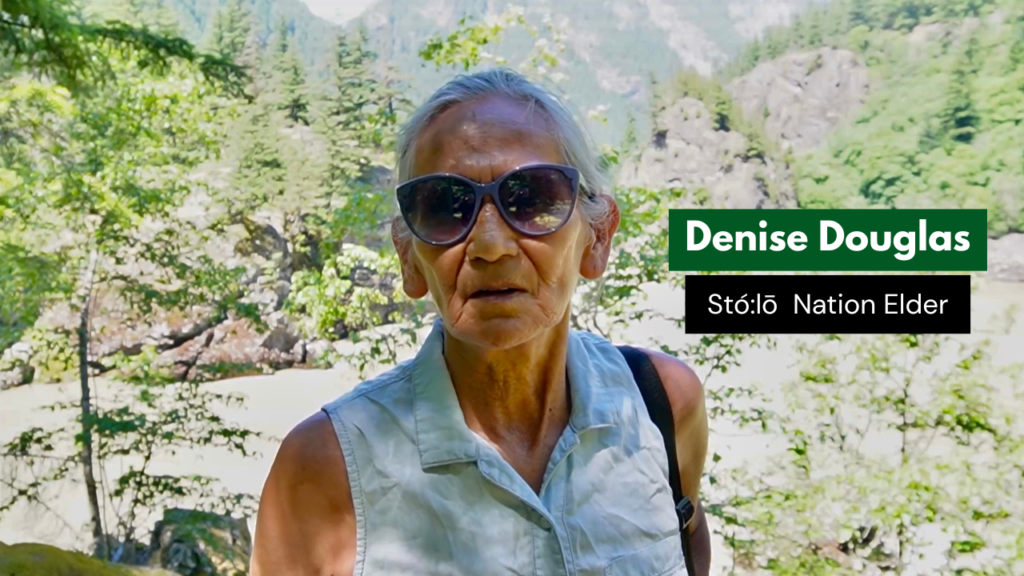
Denise is a Stó:lō nation elder and carries three Indigenous names, one of which is Chick Pinnock, a name that was given to her by her mother.
Denise Douglas tells us the story of this fishing site, located above the Fraser Canyon, still in use, where salmon are dried every summer the way they have been for generations.
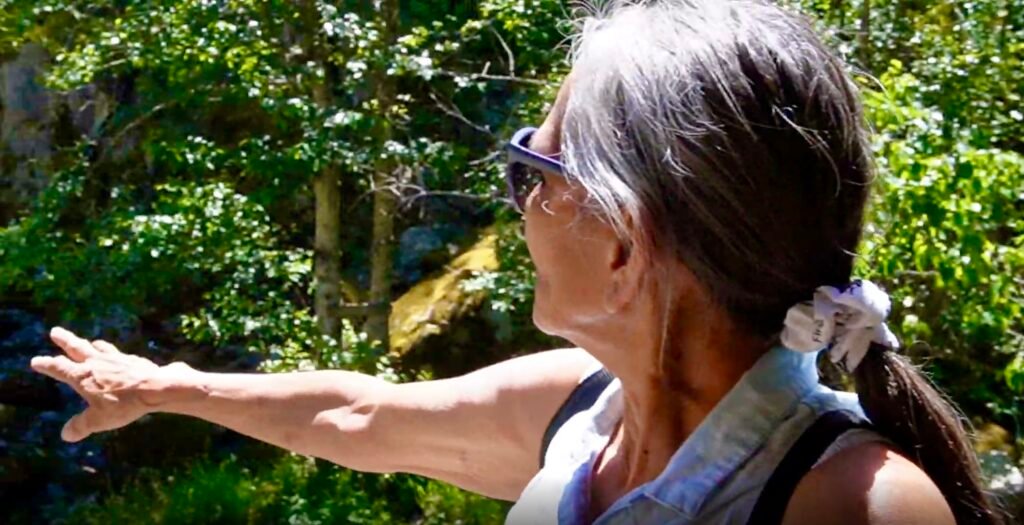
“…the earliest recorded testimony of this particular [fishing] site was when Simon Fraser was lost on the Fraser River.”
– Denise Douglas
High above the Fraser River, past cell service and a long way from town, the land feels wild. Steep cliffs, loud water, wind in the pines. It has every mark of a place no one has touched. You pick your way over jagged rock, stepping around patches of sage and low berry bushes. It feels remote.
And yet you’re standing in the middle of a human place.
Look closely at the stone under your feet. There are grooves worn smooth by centuries of the same footsteps, the path families have always taken from the river to the drying rack to the camp. These aren’t accidental trails. They’re worn in by repetition and care, the same steps somebody’s grandparents took, and their grandparents before them.
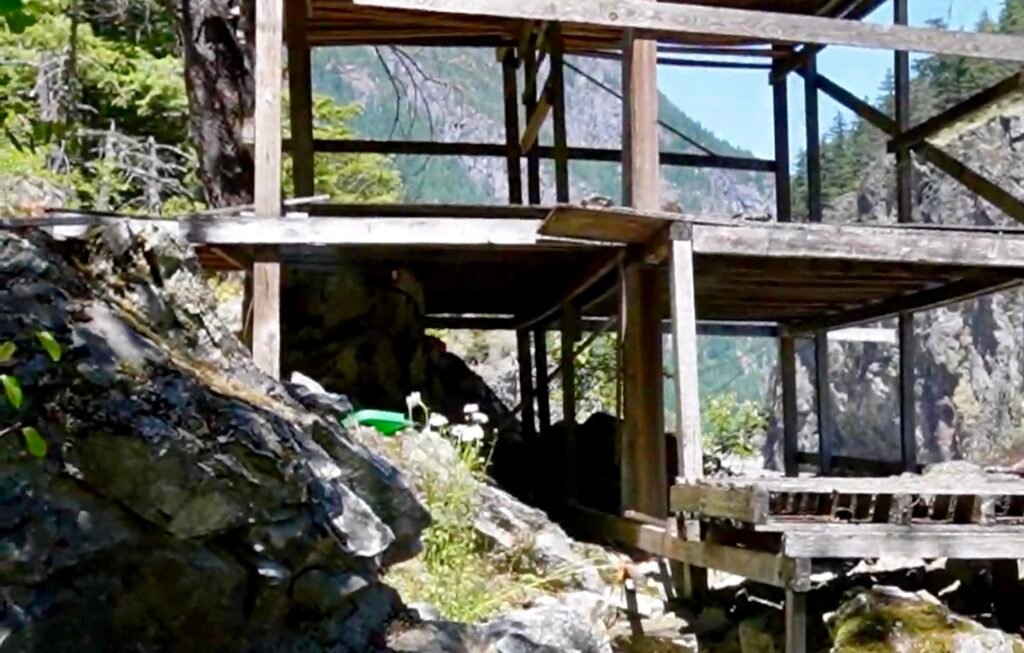
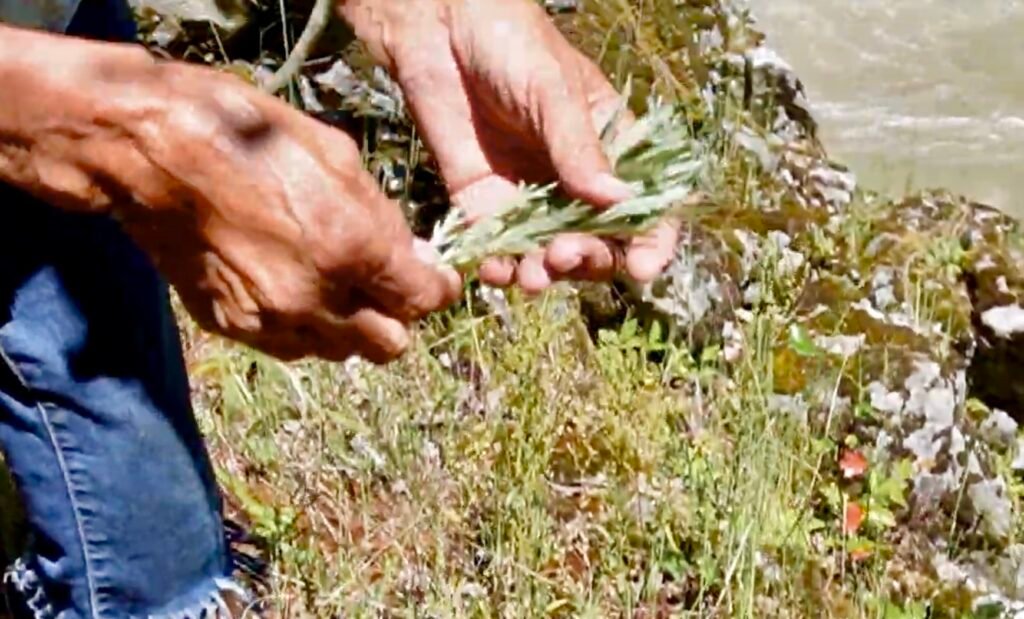
This is a fishing site, still in use, where salmon are dried every summer the way they have been for generations. A red rag tied to the rack tells the neighbours someone is home. And the wilderness around you isn’t wild at all. The berries, the sage, the roots tucked between the rocks are food, or medicine, or both. None of it is an accident. It’s a cultivated place. A garden.
When Simon Fraser came down the river in 1808, he wrote about the little bay and the people who met him with roasted salmon. He saw the welcome. He didn’t see the work and the design behind it.
This land was never untouched. It’s full of touch, and full of knowing. The line people like to draw between nature and humanity was never really here. You aren’t standing in the wild. You’re standing in somebody’s home.
Lesson:
This was never wilderness; it’s a cultivated home, tended for thousands of years. Look closely and you’ll see we belong to the land, not the other way around.
Watch the whole story on our YouTube channel!
Subscribe to NatureNow for more stories from BC’s Knowledge Keepers!